Explore the sections
Definition of a Termination Letter
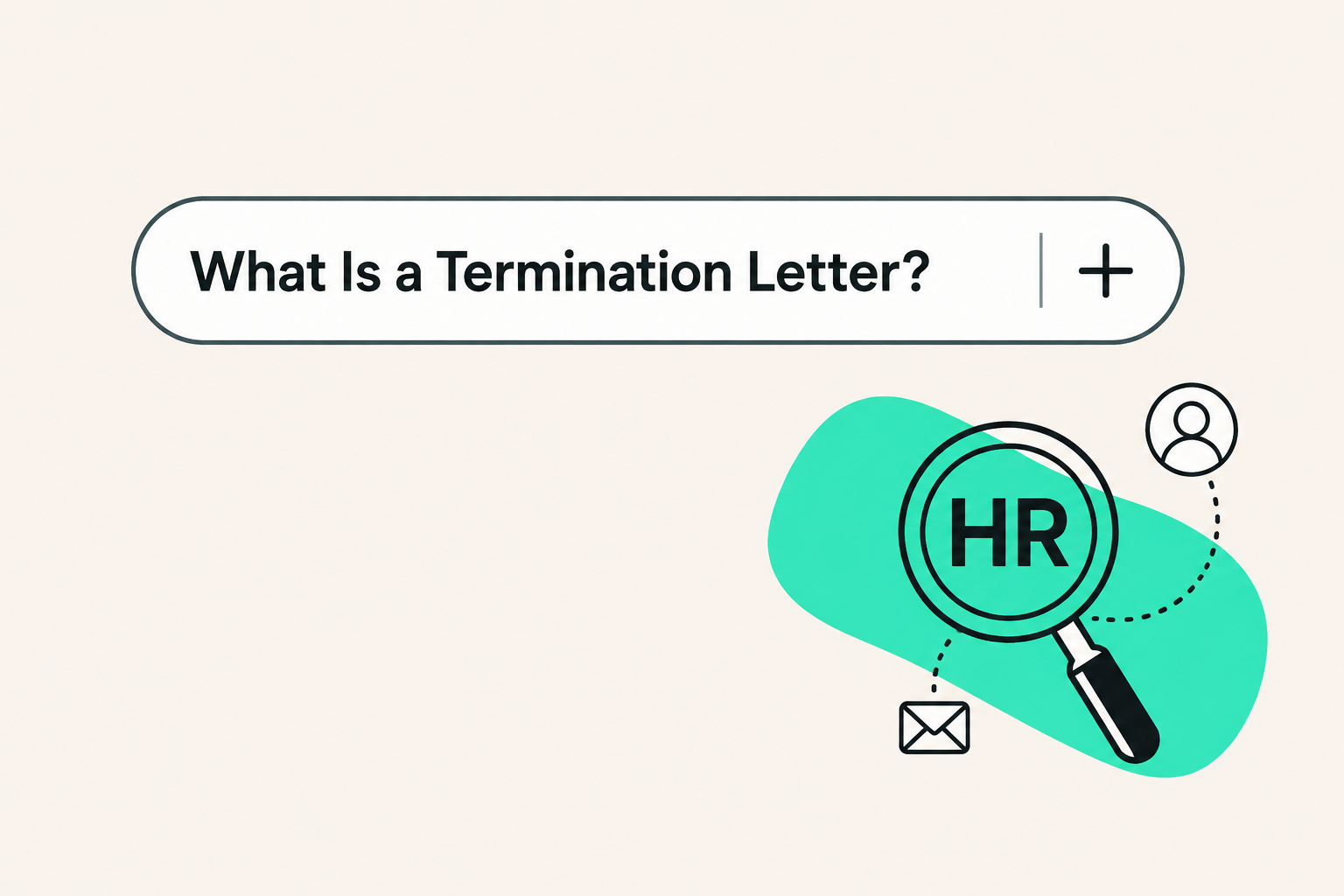
A termination letter is a written document provided by an employer to an employee to formally confirm the end of the employment relationship. It specifies the termination date, the terms of departure and, in some cases, the reasons for the decision. It is an important document from a legal, administrative, and human perspective.
A termination letter is strongly recommended to ensure clarity, proper documentation, and compliance with HR best practices.
What Is the Purpose of a Termination Letter?
A termination letter is used to:
- Confirm the official termination date in writing
- Indicate whether the termination is a dismissal, layoff, or temporary layoff
- Specify the financial terms (working notice or pay in lieu of notice, severance pay, vacation pay, etc.)
- Document the provision of relevant documents, such as the Record of Employment, confirmation letters, releases, etc.
- Protect both parties in the event of a future dispute
It is also a respectful communication tool that can help reduce confusion or distress during a sensitive time.
What Should a Termination Letter Include?
There is no single standard template, but a clear termination letter should include:
- The employee’s name
- The date the letter was prepared
- The termination date
- The reason for the termination
- The name of the manager or HR representative
- The terms of termination (notice, severance, return of company property, etc.)
- An offer of assistance or support, if applicable (career transition services, references, etc.)
Termination Letter or Layoff Letter?
The term layoff letter is often used when an employer ends an employee’s employment for economic or organizational reasons.
More broadly, however, termination letter is a general term that can also apply to a dismissal, resignation, or the end of a fixed-term contract.
Is a Termination Letter Mandatory?
Quebec’s Act respecting labour standards does not explicitly require a written termination letter for every termination of employment, but certain situations effectively require written notice:
- In the case of a collective dismissal, written notice is mandatory.
- If an employer terminates employment without serious cause, it must provide written notice or pay an equivalent indemnity.
- In a unionized environment, the collective agreement may require a formal letter.
In all cases, providing a termination letter is strongly recommended.
In Summary
A termination letter is an official document provided to an employee to formalize the end of the employment relationship. It specifies the departure date, the applicable terms and, in some cases, the reasons for the decision. Even when it is not mandatory, it remains an HR best practice that supports both administrative diligence and respectful treatment of the individual concerned.
Important Notice – The content presented in this article is provided for informational purposes only. It does not constitute legal advice or personalized professional advice. Every management or employment termination situation may involve specific circumstances. We recommend consulting a lawyer, legal advisor, or qualified HR professional before making a decision.
Related Service
Career Transition ServicesLeduc HR team · Published on